
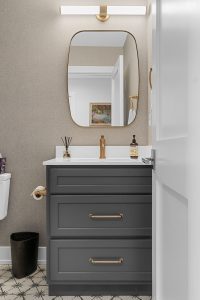
 It’s easy to fall in love with a finish in a showroom. It’s harder to love that same finish three years later after fingerprints, cleaning, sunlight, kids, pets, and everyday wear have had their way with it. A beautifully designed home isn’t just about how it looks on day one—it’s about how it holds up. Choosing finishes that age well means selecting materials and surfaces that stay attractive, feel comfortable to live with, and don’t require constant maintenance to look “nice.”
What “Finishes That Age Well” Really Means
A finish that ages well does two things: it wears gracefully and it cleans easily. It doesn’t show every smudge, scratch, or water spot. It holds up to routine use without looking tired. The goal isn’t perfection—it’s durability with a lived-in softness. Finishes that age well tend to have depth, texture, or subtle variation that hides the little marks that show up in real life.
Go For Texture Over Gloss Finishes
High-gloss looks striking, but it often highlights imperfections. It can show fingerprints, streaks, and tiny scratches more than most homeowners expect. Softer sheens and tactile textures usually feel more forgiving. Matte and satin finishes often look more consistent over time, especially in busy spaces. When you’re choosing finishes that age well, think “forgiving” and “cleanable,” not “flawless.”
Choose Materials That Hide Wear
Natural variation is a secret weapon. Stone with movement, wood grain, lightly patterned tile, and surfaces with subtle mottling help disguise daily wear. Solid, perfectly uniform surfaces can look stunning—but they can also show every mark. A finish with visual depth helps a home stay looking polished without constant upkeep, which is a big reason finishes that age well tend to have a little dimension to them.
Consider How You’ll Clean It
Some finishes are technically durable but miserable to maintain. If a surface requires specialty cleaners, frequent sealing, or constant polishing to look good, it may not feel “worth it” in daily life. A better approach is selecting finishes that tolerate normal cleaning habits. Finishes that age well work with your routine, not against it.
Think About Sunlight and Time
Natural light is beautiful, but it changes materials. Some woods deepen or shift over time. Some fabrics fade. Some paint colors look different as lighting changes seasonally. A good designer plans for how the home will look in bright afternoon sun and soft evening light—and how it will look after years of exposure. Choosing finishes that age well includes considering time as part of the design.
Choosing Finishes – The Most Timeless Option Is the One You Don’t Have to Babysit
The best homes feel relaxed, not fragile. When finishes are chosen with durability and real life in mind, the home stays inviting and cohesive—without feeling like you have to protect it from your own family. Finishes that age well are the ones that make the space easier to live in, not harder.
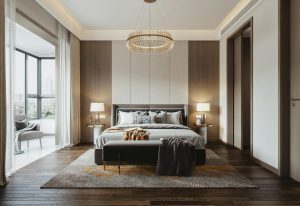 A primary bedroom has one job: help you unwind. Yet many bedrooms feel more like a catch-all space than a retreat. Clothes drape over chairs, lighting feels harsh, and the layout competes with relaxation instead of supporting it. Thoughtful primary bedroom design can shift the space from chaotic to calming without relying on major renovations. It’s about focusing on the sensory details that shape how your mind and body feel the moment you walk in.
Primary Bedroom Design That Creates the Relaxing Retreat You Want & Need
Start With Lighting That Supports Your Rhythm
Lighting dictates mood more than almost any other design element. Bedrooms benefit from layered lighting—ambient, task, and accent—so the room can shift effortlessly from morning brightness to evening calm. Warm-temperature bulbs (2700K–3000K) soften the entire space, especially when paired with dimmers. Sconces or pendant lights beside the bed free up nightstand space and eliminate the glare that overhead fixtures create. If you want the room to instantly feel more peaceful, adjusting lighting is one of the quickest wins.
Choose Colors for Your Primary Bedroom That Quiet the Nervous System
Color psychology matters most in the room where you begin and end each day. Soft neutrals, muted greens, warm grays, and dusty blues tend to anchor the space without feeling heavy. These tones support natural relaxation because they mimic colors in nature and reduce visual noise. In primary bedroom design, contrast is still important—too much neutrality can feel flat—so adding depth through textured bedding, natural woods, or toned-down accent colors gives the room dimension while keeping the palette restful.
Your Primary Bedroom Layout Should Encourage Flow and Ease
Many bedrooms feel cramped not because they’re small, but because the layout forces awkward movement. Make sure there’s a clear pathway from the door to the bed and that furniture doesn’t jut into natural traffic lines. Positioning the bed so it’s visible when you enter creates a sense of grounding. Incorporating closed storage—dresser drawers, baskets, nightstands with doors—helps eliminate visual clutter, which makes the entire room feel calmer even when life gets busy.
Add Sensory Details That Signal Relaxation
The most relaxing bedrooms engage the senses lightly, without overstimulation. Soft rugs, breathable fabrics, blackout curtains, and a thoughtfully chosen scent can all support a restful environment. Consider natural materials like linen, cotton, wool, and wood, which feel warm and inviting without adding chaos. For clients who struggle with sleep, noise-absorbing textiles or simple white-noise strategies can make a noticeable difference.
A Primary Bedroom Retreat Designed for Real Life
A well-designed primary bedroom doesn’t need to feel staged or overly curated. It should feel lived-in, supportive, and aligned with how you naturally wind down. When lighting, color, and layout work together, the space becomes more than just a room with a bed—it becomes a daily reset point that’s built to restore you.
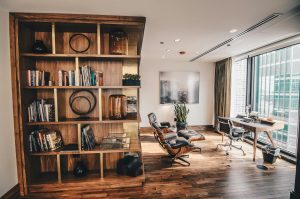 A home office should make your day feel easier, not more stressful. Yet many work-from-home setups evolve piecemeal – an extra chair here, a mismatched lamp there – until the space becomes a mix of convenience and compromise. Realistic home office design isn’t about creating a Pinterest-perfect workspace. It’s about designing an environment that supports focus, feels good on camera, and works with your actual daily routine.
Create a Background In Your Home Office Design That Looks Good Without Trying
Video calls have made the background almost as important as the workspace itself. You don’t need a full bookshelf wall or bold statement art to pull this off. What matters is intention. A clean, neutral backdrop keeps the eye relaxed and prevents visual distractions. Soft greenery, textured wall panels, or a simple framed print create interest without overwhelming the screen. The goal is to convey calm professionalism—something that blends into the conversation so the focus stays on you, not what’s behind you.
Incorporate Lighting in Your Home Office Design That Makes You Look Awake
Lighting impacts everything—from how you appear on video to how energized you feel during long stretches of work. The most effective setups pair natural daylight with adjustable artificial light. Place your desk so indirect daylight hits your face rather than your back; front-facing light keeps shadows minimal and prevents the overexposed halo effect. When daylight isn’t enough, a warm LED desk lamp or overhead fixture fills the space without harshness. In home office design, layered lighting isn’t a luxury—it’s what keeps eyestrain down and video calls clear.
Use Storage That Works the Way You Do
Clutter builds up quickly in a home office because work and life tend to overlap. Closed storage is your best friend here—drawer units, cabinets, and bins hide the mess so the space feels calm and intentional. Open shelving can still work, but keep it curated: a few books, a plant, maybe a sculptural object. The more visual noise you remove, the easier it becomes to shift into focus mode. Storage should support habits, not fight them. If you drop papers on your desk out of convenience, add a desktop organizer or a hidden inbox tray.
Set Up a Layout That Reduces Stress
A functional layout supports both the body and the mind. Make sure you have enough surface area for your daily tasks, and keep frequently used items within reach. If possible, separate work zones—one for the computer, one for writing or reading—to mimic the flow of a traditional office. This creates small mental resets throughout the day and subtly improves productivity.
Home Office Design – A Space That Supports Real Work
A well-designed home office blends clarity, comfort, and ease. When your background, lighting, and storage work together, the space becomes a place where work feels more manageable—and video calls feel a whole lot less stressful.
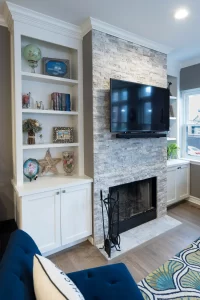 A fireplace is naturally the heart of a room—but the wall surrounding it decides whether it fades into the background or commands attention. Modern fireplace feature walls blend architectural design with everyday function, turning living rooms into cohesive, beautifully lit spaces that feel both calm and complete.
Stone Fireplace Feature Walls Add Texture and Weight
Stone brings depth, texture, and a timeless feel. From stacked limestone to smooth quartzite, stone fireplaces make an immediate statement. Lighter tones brighten modern interiors, while darker hues create grounded warmth. Continuing stone onto a low bench, hearth, or adjacent shelving ties the whole composition together without visual clutter.
Tile for Fireplace Feature Walls: Versatility and Detail
Tile brings endless variation in color, size, and finish. Large-format porcelain panels create sleek surfaces with minimal grout, while handmade ceramics or marble mosaics introduce artistry. A tiled surround can be extended vertically for dramatic height or wrapped horizontally to emphasize width—both techniques visually anchor the firebox and balance tall ceilings.
Plaster and Stucco for Fireplace Feature Walls
Smooth plaster or limewash provides a seamless look that highlights shape and proportion over pattern. This minimalist take on fireplace feature walls works well in modern and transitional homes alike. Subtle curvature, recessed niches, or a linear gas insert add sophistication. Because plaster is paintable, future refreshes are simple to achieve without needing to fully remodel the fireplace.
Integrated Storage Elevates Everyday Function
The best fireplace feature walls do more than look good—they work hard. Built-in shelving, concealed cabinets, or asymmetrical niches offer space for décor, media components, or wood storage. When paired with discreet lighting, storage becomes part of the aesthetic rather than an afterthought, keeping remotes, cables, and speakers out of sight.
Lighting for Fireplace Feature Walls: Proportion Matters
Accent lighting brings materials to life. Wall washers and recessed LEDs graze stone and tile to reveal texture, while art lights spotlight shelves without glare. Correct proportion—balancing firebox size, wall height, and mantle depth—ensures the wall feels commanding but not overwhelming. Measure twice; the relationship between opening, hearth, and ceiling line sets the tone.
Where Design Meets Comfort
A thoughtfully built feature wall transforms the fireplace from a heating element into the emotional center of the home. With the right material palette, integrated storage, and lighting plan, the result is architecture and atmosphere in a single gesture—warm, functional, and made to last.
 Lighting isn’t just about brightness—it’s about mood. The color temperature lighting you choose affects how a room looks, feels, and even how people behave in it. Warm tones invite comfort, cool tones sharpen focus, and balanced tones tie a home together. The key is knowing what belongs where and why it matters for daily living.
Warm Color Temperature Lighting Creates Comfort
Warm light (2700K–3000K) mimics the golden glow of sunset. It softens hard edges and makes colors feel richer, which is why it’s ideal for bedrooms, living rooms, and dining areas. This type of color temperature lighting encourages relaxation and conversation, setting a tone that feels calm and connected. Dim-to-warm bulbs extend the effect for evening routines.
Cool Color Temperature Lighting Enhances Focus
Cooler light (4000K–5000K) resembles daylight and energizes a space. It’s perfect for kitchens, home offices, laundry rooms, and garages where clarity matters. Under cool color temperature lighting, details stand out and surfaces look crisp—helpful when reading recipes, handling tools, or doing close work. Use it with high-CRI bulbs to maintain accurate color rendering.
Neutral Lighting Balances the Home
Between warm and cool lies neutral white (3500K–4000K), the bridge tone that keeps transitions smooth. Neutral color temperature lighting prevents jarring jumps between cozy and clinical zones and suits hallways, mudrooms, and shared spaces. It’s also a smart default for open-concept homes where multiple activities and ambiences overlap throughout the day.
Layer Light with Intentional Color Temperature Lighting
No single fixture can do it all. Layered lighting combines ambient, task, and accent sources—each with a deliberate color temperature lighting choice. In a kitchen, warm pendants create dining ambiance, cool under-cabinet strips support prep work, and neutral recessed cans provide overall visibility. In a bedroom, warm sconces and a neutral ceiling fixture keep the room versatile without glare.
Small Tweaks, Big Perception Shifts
Color temperature lighting changes how surfaces read: marble looks cleaner under neutral light; wood feels richer under warm tones; stainless steel pops under cooler light. Dimmers expand usefulness, while smart controls schedule shifts from cool morning light to warm evening tones that support wind-down.
Design That Matches Real Life
When lighting matches the function of each space, your home feels intentional and comfortable. Getting color temperature lighting right isn’t about memorizing specs—it’s about shaping mood, clarity, and flow so rooms support cooking, relaxing, and everything in between.
Schedule a quick consult to design a lighting plan that brings warmth, clarity, and comfort to every room.
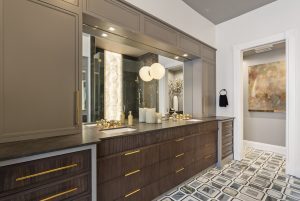 Bathrooms work hard. Steam, splashes, and daily traffic challenge every surface, so design choices have to keep their good looks even after long, humid mornings. A moisture-smart bathroom design doesn’t require a remodel dictionary—just a few practical decisions that protect edges, seams, and air flow.
Durable Bathroom Design: Where Moisture Actually Goes
Start with the path water takes. Splashes hit vanity fronts and toe-kicks, steam condenses on mirrors and ceilings, and drips run off elbows onto floors near the sink and tub. A durable bathroom design anticipates those paths with sturdy edges, wipeable finishes, and ventilation that clears the air quickly.
Surfaces That Survive Daily Use
Choose materials that shrug off water and clean easily. Quartz or dense porcelain tops handle puddles; solid-surface or tile shower surrounds avoid swollen seams. On floors, quality porcelain tile resists standing water and muddy footprints. Seal grout lines where recommended, but don’t rely on sealer to fix poor details—tight joints and good slopes matter more.
Edges, Seams, and Splash Zones
Protect the places water lingers. Add a shallow backsplash behind the faucet, run silicone neatly where planes meet, and wrap vanity edges with durable finishes that won’t blister. In showers, keep the niche out of the direct spray if possible, and slope the shelf slightly so it drains. Little angles prevent big headaches.
Ventilation That Actually Clears Steam
A quiet, correctly sized exhaust fan is the bathroom’s best friend. Use a timer or humidity sensor so it runs long enough to dry the room after showers. If the mirror stays foggy 15 minutes later, the fan is undersized or the duct path is too long. Crack the door during cool-down to keep air moving.
Bathroom Design – Lighting for Clarity and Comfort
Layer bathroom light like any other room. Side-mounted sconces at face level reduce shadows for grooming; a soft overhead or backlit mirror keeps the room from feeling stark. Warm-neutral tones flatter skin and tile alike. Dimmers let the space shift from energizing mornings to low-light, late-night trips.
Storage That Prevents Clutter in Your Bathroom Design
Moisture-safe storage keeps counters usable. Deep drawers with organizers corral daily items, and a slim cabinet can hold cleaning supplies off the floor. Keep towels near the shower so drips don’t trail across the room.
If you’d like a quick durability check on your current bathroom, request service and we’ll suggest changes that make it tougher without changing your style.
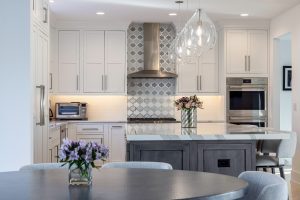 Great rooms don’t feel “bright”—they feel balanced. When lighting is planned as a simple system, surfaces look natural, tasks are easy, and the room can shift from lively to calm without hunting for switches. The secret isn’t buying more fixtures; it’s choosing a few that work together and giving them clear jobs with well-design lighting plans tailored to your lifestyle.
Cohesive Lighting Plans: The Three Layers
Cohesive lighting plans blend ambient, task, and accent so no single layer has to work too hard. Ambient sets the baseline, task puts light where hands and eyes work, and accent adds dimension. Think of it like audio: a steady rhythm (ambient), clear vocals (task), and a little harmony (accent).
Ambient: Your Everyday Baseline
Ambient light should be even and comfortable, not glaring. Use ceiling fixtures or indirect sources that bounce light off walls or ceilings to reduce harsh shadows. Keep color temperature consistent across the room so walls and floors don’t shift tones from fixture to fixture. If the room feels flat, don’t crank brightness—add depth with the other layers.
Task: Bright Where It Matters
Task lighting makes daily life easier: reading on the sofa, chopping at the island, homework at the table. Place it close to the work surface so you can dim the rest of the room without losing visibility. Favorites include under-cabinet channels in kitchens, swing-arm lamps in living areas, and desk lamps with simple dimming. If you squint or cast your own shadow, the task beam needs to move or brighten.
Accent: Shape and Mood
Accent lighting isn’t decoration; it’s definition. Aim small, warm sources at artwork, open shelves, or textured walls to create gentle contrast. A few low-wattage, well-aimed accents make a space feel layered and calm. If you can spot the bulb, it’s too bright or aimed at the wrong surface—wash the material, not your eyes.
Controls That Keep Things Simple
Group by purpose, not fixture type. One control for ambient, one for task, one for accent. Save two or three scenes you’ll actually use—Morning (bright, cool-neutral), Dinner (lower, warmer), and Wind-Down (mostly accent/task at low levels). Put the controls where habits happen: near the kitchen entry, by the sofa, and at the bedroom door.
Lighting Plans – Common Mistakes to Avoid
-
Too many cans, not enough lamps
-
Mismatched color temperatures that fight each other
-
No dimming, so every scene feels the same
-
Accent lights pointed at eyeballs instead of surfaces
Want a quick walk-through to map lighting plans for your space? Talk to an expert and we’ll sketch options that look good day and night.
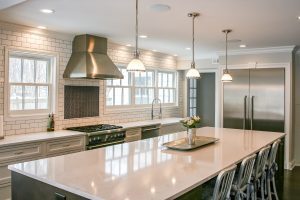 Lighting isn’t just about visibility—it’s about creating mood, enhancing design, and making a space feel truly livable. That’s why professional designers emphasize the importance of lighting layers. By combining ambient, task, and accent lighting, you can add dimension, function, and warmth to any room.
What Are Lighting Layers?
Lighting layers refer to the strategic use of different light sources, each serving a distinct purpose:
-
Ambient Lighting
The foundational, general illumination of a room—usually from ceiling fixtures or recessed lighting. It sets the overall tone and ensures you can move around safely. -
Task Lighting
Focused light for specific activities like cooking, reading, or working. Think pendant lights over an island, under-cabinet lighting, or a desk lamp. -
Accent Lighting
Decorative lighting used to highlight architectural features, artwork, or create mood. Wall sconces, track lights, or LED strips are common examples.
Why Layered Lighting Matters
-
Functionality: You’ll always have the right light for the right task.
-
Mood: You can instantly shift the atmosphere with a dimmer or accent light.
-
Aesthetic Depth: Layering draws attention to textures, finishes, and focal points.
-
Energy Efficiency: Using focused lights where needed can reduce reliance on overheads.
Tips for Creating Effective Lighting Layers
-
Use dimmers for flexibility and mood control.
-
Mix fixture types—don’t rely on one central light source.
-
Highlight what matters—an art piece, a textured wall, or even an alcove.
-
Think in zones, especially in open-concept spaces. Each area can have its own balance.
Leveraging Lighting Layers In Your Home
Mastering lighting layers is one of the most effective ways to enhance your home’s design without major renovation. With the right mix of ambient, task, and accent lighting, you can elevate any space from basic to beautifully intentional.
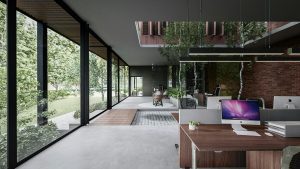 As more people seek comfort and calm in their homes, biophilic design has emerged as one of the most compelling trends in interior architecture. It’s more than just adding plants—it’s about creating spaces that foster a deeper connection with the natural world.
At Ablaze Design Group, we believe that great design doesn’t just look good—it feels good. That’s exactly what biophilic spaces are all about.
What Is Biophilic Design?
Biophilic design refers to incorporating elements of nature into built environments to enhance well-being, reduce stress, and improve mood. It draws on textures, shapes, and systems found in nature to create environments that are both nurturing and restorative.
Elements of Biophilic Design to Consider
-
Natural Light
Maximize daylight with large windows, skylights, and reflective surfaces that bounce light deeper into the home. -
Indoor Plants & Green Walls
Live greenery improves air quality, adds texture, and invites the outdoors in. -
Natural Materials
Use wood, stone, rattan, and clay to evoke the feeling of organic warmth. -
Earth-Tone Color Palettes
Soft greens, warm browns, and muted neutrals create a calming environment inspired by nature. -
Water Features
Even small fountains or indoor water walls can bring soothing sound and movement to a space.
Benefits Beyond Aesthetics
Biophilic interiors aren’t just beautiful—they’re beneficial. Studies show they can:
-
Lower stress and blood pressure
-
Boost creativity and focus
-
Improve sleep and mood
Bringing the Outside In
If you’re longing for a calmer, more connected home environment, biophilic design offers a timeless solution. Whether it’s a large-scale remodel or a few nature-inspired updates, these elements can transform the way you experience your space.
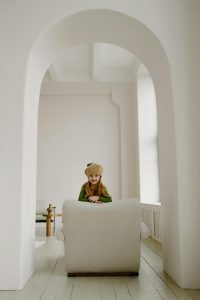 Once a staple of classical architecture, interior arches are making a strong comeback in modern home design—and for good reason. These elegant, curved forms add a sense of softness and fluidity to a space that can feel both contemporary and timeless.
At Ablaze Design Group, we’ve seen a growing interest in arches as homeowners seek to infuse warmth and personality into their spaces. Here’s how this classic feature is being reimagined for today’s interiors.
Why Interior Arches Are Making a Comeback
Straight lines and sharp corners dominated design for years, especially in minimalist and industrial styles. But lately, homeowners are gravitating toward spaces that feel inviting, layered, and soothing.
Arches provide:
-
Visual flow between rooms
-
Softer transitions between spaces
-
A sense of architectural interest without being overwhelming
-
A touch of nostalgia with a modern twist
Ways to Incorporate Arches at Home
-
Doorways & Passages
Arched openings between rooms offer a seamless transition while adding architectural charm. -
Built-In Nooks
Add a cozy reading nook, bar, or shelving unit with an arched frame to create a focal point. -
Windows & Mirrors
Arched windows let in more light and offer a refined, old-world vibe. Even mirrors with arched tops can echo the look. -
Furniture & Decor
Curved lines in furniture, lighting, and even paint techniques mimic the arch trend without major renovation.
Design Tip: Balance Is Key
To keep arches feeling fresh—not dated—pair them with clean lines and natural materials. For example, a curved doorway flanked by sleek cabinetry and muted tones creates a harmonious blend of tradition and modernity.
Interior Arches in Architectural Design – Embrace the Curve
If you’re looking to soften the structure of your space and bring in a little movement, interior arches could be your perfect solution. Whether through architecture or accents, these timeless curves can elevate your home with a subtle sophistication.
Read What Our
Clients Say About Us

As a real estate professional, I’ve witnessed countless renovations, and when it came time for our own remodel, I knew I wanted to work with a design-to-build firm. While the main focus was a kitchen renovation, it was important to us that someone look at our entire first floor and how we wanted to live in the redesigned space. For efficiency, ease, and accountability, we also wanted one company to oversee the entire project.

The Ablaze Design Group revamped our kitchen and did an amazing job. It is now, finally, our dream kitchen. They took time and care with every step of the process. There were no gaps in days – they came everyday until the job was done. We couldn’t be happier with the outcome or the people who work at ABL!

I love working with Ablaze Design Group! They are very responsive and they are very friendly. I have worked with contractor that was very arrogant, but ABL was very down to earth and was eager to help me get my work done. And I worked with Dina, she very helpful. I am very happy working with ABL.

As a design professional, I know that I can always count on The Ablaze Design Group to provide exceptional customer service, and the highest level quality of work. I give them my highest professional recommendation.

Outstanding work once again. We are in the process of a lot of painting and ABL could not be more helpful and very competitive with their prices. The workers are great, talented and friendly. We have used ABL for 10+ years and no complaints.

Looking for a professional painter look no further. Howard and his team of Jose, Juan and David repainted our kitchen to perfection. From start to finish no issues. Set up – painting and clean up was perfect. Have future projects that we will reach out to ABL for assistance.
The Ablaze Design Group fixed the walls and ceiling in my bedroom, put on new baseboard, painted everything, installed a ceiling fan, fixed the walls in the stairwell and painted it and the hall ceiling. The work was great, the price was fair, they were courteous, accommodating, and they didn’t leave a mess. We are very pleased.

Howard and his team are the best! We needed to update our entry area and dining room, and convert an old iron staircase railing into a modern wooden one. The whole team was easy to work with, started and finished exactly when they said they would, and the result is just beautiful. We are completely satisfied and will hire them again. Many thanks!
From the first visit by the owner through insurance quotes and design iterations to the many phases of our fully gutted kitchen rehab, the experience could not have been better. We love LOVE our new kitchen. The memory of the experience with ABL is a very good one. WOW
Any questions or suggestions?
Write us a message and we will contact you!
Contact Info
-

259 Waukegan Ave
Highwood IL 60040 -

Office Hours:
Mon- Friday: 8am - 5pm
Store Hours:
Mon - Wed: 10am - 5pm
Thursday: 10am - 7pm
Friday: 10am - 5pm
Saturday: 11am- 4pm -

info@ablazedesigngroup.com
-

(847) 579-1600