
By Ava Markoutsas
ABLAZE Design Group
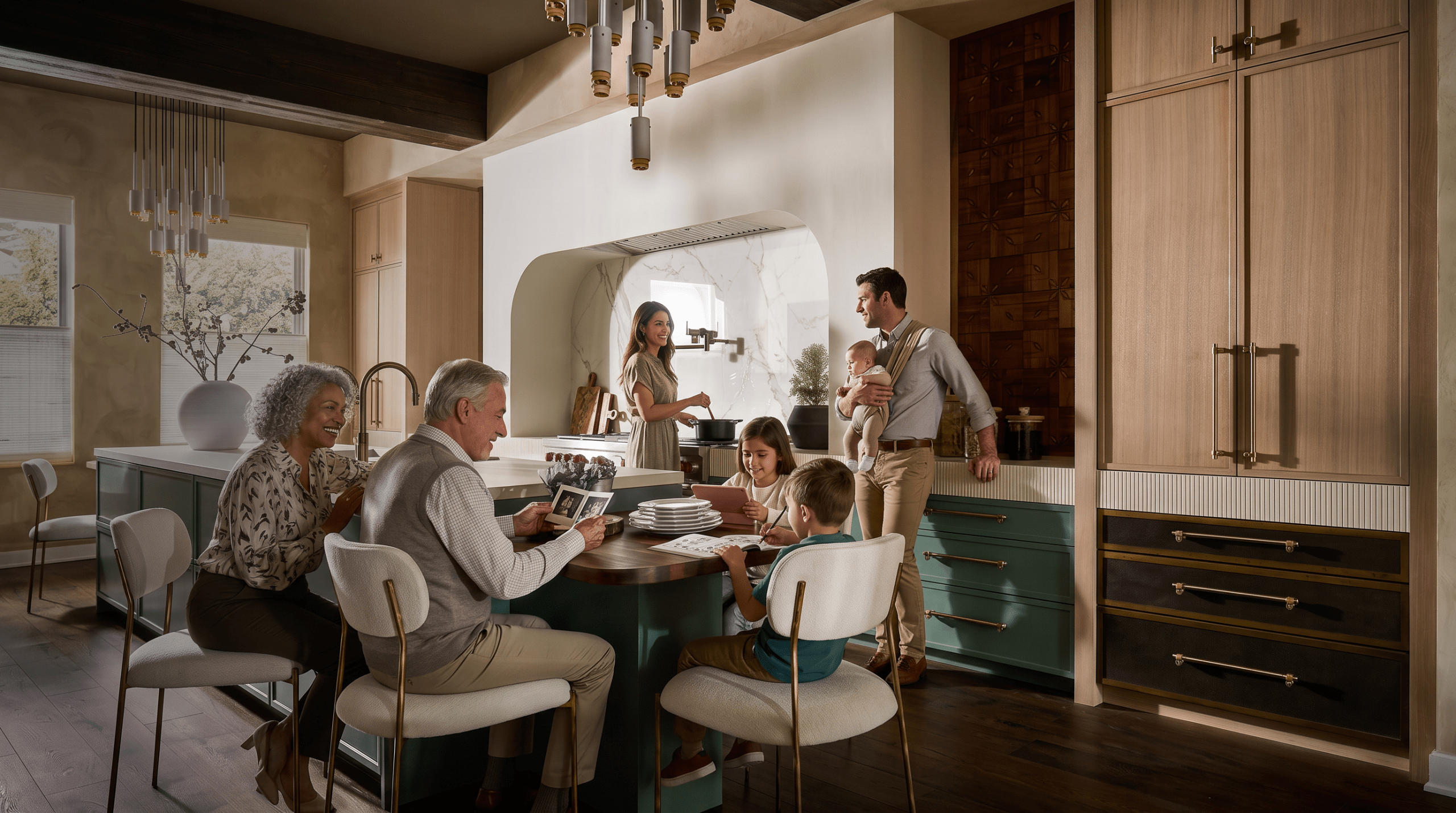
One minute, your kitchen island is covered with sippy cups and coloring books. The next, it is homework headquarters, a snack bar for a house full of teenagers and the place where everyone gathers during the holidays.
Family life changes quickly. Our homes should be able to keep up.
At ABLAZE Design Group, we believe the best homes are not designed for one perfect stage of life. They are designed to grow with the people living in them. That means creating spaces that work for today’s routines while also anticipating what your family may need five, ten or even twenty years from now.
We often say, “Form Follows Function First.” In other words, a home can be beautiful, but if it makes everyday life harder, it is not truly well designed.
Before we begin drawing plans or selecting materials, we want to understand how a family actually lives. Where do the backpacks land after school? Does everyone crowd around one small section of the kitchen each morning? Can you prepare dinner while helping with homework? Is there a comfortable place for grandparents to sit and be part of the activity? Where does clutter seem to multiply overnight?
These everyday details shape better design.
Our approach centers on family, flow and function. When those three things are aligned, the home feels easier to live in. Rooms connect more naturally, storage is located where it is actually needed and daily routines require less effort.
Universal Design plays an important role in that process. While the term is often associated with aging in place, it is really about creating homes that are comfortable, intuitive and usable for people of all ages and abilities. Our design team is certified in Universal Design, allowing us to thoughtfully incorporate these principles without making a home feel clinical or compromising its style.
A wider walkway is helpful for a grandparent using a walker, but it is equally helpful for a parent carrying a baby, a toddler racing through the kitchen or two people trying to unload groceries at the same time. Easy-to-reach drawers work for children, adults and anyone who would rather not crawl into the back of a cabinet searching for a mixing bowl.
Good Universal Design should not announce itself. It should simply make life feel easier.
In a kitchen, that may mean incorporating drawers instead of hard-to-reach lower cabinets, creating multiple work zones or providing seating at different heights. A large island can become a place for cooking, homework, entertaining and family conversations. Durable surfaces can handle spills and everyday wear while still looking refined.
Elsewhere in the home, a playroom may eventually become a study space, home office or teen lounge. A first-floor den could later serve as a guest room. A luxurious curbless shower can feel spa-like today while also providing greater comfort and accessibility in the future.
Wellness matters, too. A thoughtfully designed home can support both physical and emotional well-being. Natural light, comfortable circulation, quieter materials, layered lighting and less visual clutter can help a space feel calmer. When everything has a place and the floor plan supports your routine, the home asks less of you.
And honestly, most families could use a home that asks a little less of them.
A home that grows with you is not about trying to predict every future possibility. It is about making thoughtful choices now that provide flexibility later. It should welcome new babies, growing children, visiting grandparents, changing routines and all the beautiful chaos in between.
Because the most successful homes are not simply designed to be admired. They are designed to be lived in.